
TEXTS
“The control tower with a crow as its guide can no longer chart a course for the future. They have long accepted that history has ended and their gods are long dead. Nothing is visible through their viewfinders anymore. The codes for the future are not in Zofia’s bag. The codes for the future are in the bag that Tomek clutches tightly in his lap, and we Kurd like all the world's others, know very well what is in that bag.”
– From the newspaper article Kurds, Tomek, and Kieslowski
Nurettin Erkan
Artist
Gazette DUVAR, October 23, 2020

"The selection of a Kurd as the perpetrator of the rape, which is the main trauma in the series, while racism remains a primary issue in the country, is an undeniable contribution to racism. The creators of the series have either repeated the malice constructed by the Kemalist Republic’s memory on the Kurdish ethnicity or saw no problem in such an interpretation."
– From the newspaper article There is something else about 'Bir Başkadır' for us Kurds.
Nurettin Erkan
Artist
Gazette DUVAR, November 21, 2020

"In Nurettin Erkan's recent works, you can see the traces of hope amidst the ruins of Diyarbakır Sur, the resilience of Kurdish women..."
– From the newspaper article 'We Did Not Disappear, Because Our Memory Resists!'
Jinda ZEKİOĞLU
Journalist
Newspaper Duvar, March 24, 2020, Istanbul
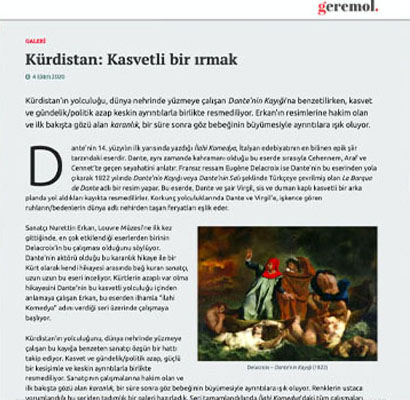
"The journey of Kurdistan is likened to Dante's Boat trying to swim in the river of the world..."
– From the newspaper article 'Kurdistan: A Gloomy River'
Özgür SERHAT
Writer
Geremol, October 4, 2020, Istanbul
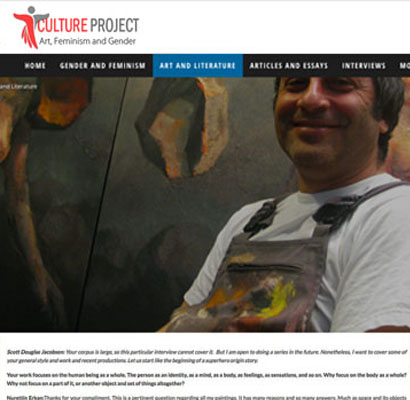
"The struggle itself epitomizes the human being and her life. A human being who does not resist against power and its oppressions cannot be defined and might be considered as a human without being. Our self is either surrounded or in resistance. I think that consciousness of a self is the beginning of resistance, and reflects itself on the body. As I mentioned before, the body is the field of resistance, and every kind of struggle to build justice, equality, and freedom finds its substance in the body."
– From the newspaper article 'My Paintings are Paintings of Resistance'
Interview: Scott Douglas Jacobsen
Journalist
May 16, 2018, US

"It is not the surface beauty of pleasure and happiness, but a deeper beauty we cannot easily name. Perhaps it is a terrible beauty (as the Irish poet W. B. Yeats called it), a passing glimpse of courage and endurance, of resistance and survival."
– From the newspaper article 'Of Bodies and Time and Melancholy'
Prof. Vinay Dharwadker
Writer, poet, translator, academician
University of Wisconsin–Madison, December 26, 2013, US

“Once a work of art—be it poetry, painting, or any form—leaves its creator's hands, it belongs to the viewer. It exists through their interpretations and the meanings it evokes in them; in fact, it needs them to truly exist. While gazing at the provocative paintings lined up in the cool, high-ceilinged space of Karşı Sanat Çalışmaları, I couldn’t help but reflect on this—because at the center of these paintings, I found myself.”
– From the magazine article 'Bare Like Stone'
Didem Gercek
Writer
Evrensel Magazine, July, 2010, Istanbul
“Two Opposing Visual Languages: In Botero, we see figures inflated like balloons, infused with a sense of lightness, while in Erkan, the figures are full and heavy like lead. What they share is their abundance of questions, refusing to settle in the spaces you want them to occupy. Botero's figures inevitably evoke concepts like 'fat' and 'caricature,' prompting reflection. How do these images succeed in not being caricatures? Or do they? To what extent do they succeed?”
– From the newspaper article 'Two Opposing Visual Languages'
Necmiye ALPAY
Writer, Linguist, Translator
Radikal, July 15, 2010, Istanbul

“In his series of paintings titled 'Body and Stone,' Nurettin Erkan emphasizes contrasts such as internal-external, existence-non existence and impermanence-permanence as well as playing with the viewer's perception of reality by creating a feeling of timelessness, emptying the objects and bodies and intertwining a new web of meanings over their new compositions.”
– From the newspaper article 'Body and Stone in Erkan's Paintings'
Lütfiye BOZDAĞ
Writer, Art Critic, Academician
2010

“I am standing in front of Erkan’s paintings, which are filled with fiery tones. The artist first draws a central figure representing power, brings it to life through painting, and then adds other figures around it. Before you know it, the canvas is filled with figures. Everywhere is bathed in the rusty colors of nature, blending with the smoke and sparks of fire... flowing from heat to cold, from cold to heat, with lines thickening and thinning, patches growing and shrinking, and figures acquiring new meanings, images turning into poetry.”
– From the newspaper article 'Things I Watched'
M. Demirel Babacanoğlu
Journalist
Newspaper İlk Haber, Adana, January 16, 2008

“The artist finds a constant opportunity for experimentation in a free space, which is also the different atmosphere created in the paintings. This is an atmosphere that, while seeming to oppose the truth, at times wants to be a mirror of the truth, and at the same time, rejects the truth, seeks another place, and presents this search as the purpose of existence.”
– From the magazine article 'Figures Questioning Existence'
Nida Nevra Savcılıoğlu
Art Critic, Editor, Dramaturge
Sanat Çevresi, 2003, Istanbul
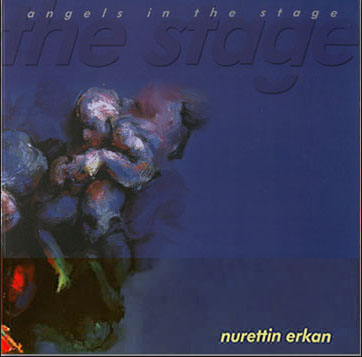
“In my opinion what confronts us here is a pictorial language that is guided by a desire to discover the basic structure that lies at the root of an infinite and invariable knowledge of the body.”
– From the catalogue article 'The Process of Being and Anonymization'
Levent Çalıkoğlu
Art Critic, Curator, Director of Istanbul Modern
Catalogue writer for *Angel in the Stage* solo show, 2003

The catalog for Nurettin Erkan's solo show *YABANCI* features contributions from three writers. Cem Mumcu contributed a poem, adding a poetic touch to the catalog. Özlem Hemiş Öztürk wrote an extensive essay that spans the entire catalog, providing a deep and comprehensive analysis of Erkan's work. Finally, at the end of the catalog, Nida Nevra Savcılıoğlu presents an interview with Erkan, offering insights into his artistic process and perspective.
– From the catalogue 'STRANGER'
Authors: Cem MUMCU
Özlem H. ÖZTÜRK
Nida N. SAVCILIOĞLU
December 11, 2002
Read the 1st full article here.
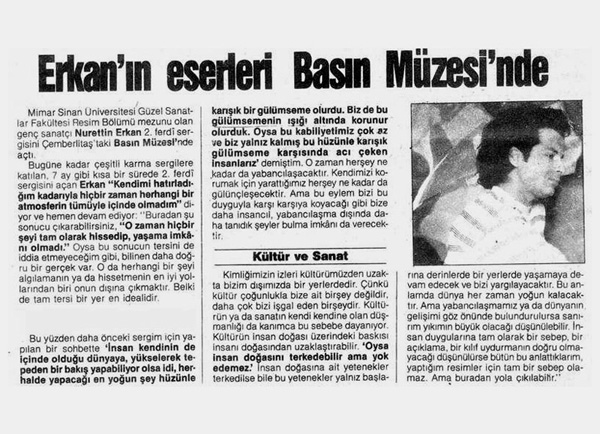
“Nurettin Erkan, a young artist who graduated from the Painting Department of the Faculty of Fine Arts at Mimar Sinan University, opened his second solo exhibition at the Press Museum in Çemberlitaş.”
– From the newspaper article 'Nurettin Erkan's Works at the Press Museum'
Nurettin ERKAN
The Artist's Statement About the Exhibition
Cumhuriyet newspaper, Istanbul, 1992